14 Best Gemini AI Photo Prompts for Girls and Boys in 2026
Scroll far enough through any Indian feed in 2026 and the same shot keeps reappearing in variations: a familiar face, unmistakably real, sta...
Light is the fastest way to change the mood of an AI image. You do not need a camera bag or a photography degree to use it well. You just need a few plain words and the sense of when to reach for them.

Most people writing image prompts describe the subject and forget the light. Ask for a woman drinking coffee and you get something flat and generic. Ask for a woman drinking coffee in soft morning light through a window and the same scene suddenly has warmth, depth, and a time of day.
The catch is that lighting vocabulary sounds intimidating. Words like chiaroscuro, key light, and Rembrandt lighting feel like they belong to people with expensive gear and a light meter. So beginners avoid them, and their images stay dull.
The good news is that you can get almost all of the benefit with a handful of everyday words. This guide translates the useful terms into plain language, shows you when to use each one, and gives you prompts you can copy straight away.
The mistake beginners make is trying to sound technical. You do not need f-stops, color temperatures in kelvin, or lighting ratios. The model responds to how the light looks and feels, not to the equipment that supposedly made it.
Instead of shot with a 5600K key light at 45 degrees, write warm light from the side with soft shadows. Both point at a similar result. The second is easier to write and just as effective.
| A simple test. If a word describes gear, skip it. If a word describes the light itself, its softness, its direction, its color, or the time of day it suggests, keep it. |
You do not need a glossary in your head. You need to answer a few plain questions about the light in your scene. Answer two or three of these in a prompt and you have already beaten most images.
1 How soft or hard is it? Gentle, wrapping light or sharp, high-contrast light.
2 Where is it coming from? The front, the side, behind the subject, or above.
3 What color or temperature is it? Warm and golden, or cool and blue.
4 What time of day does it suggest? Golden hour, harsh noon, dusk, or night.
5 How much of it is there? Bright and airy, or dim and moody.
These are the terms worth knowing. Each one is a real word photographers use, but written the way you can actually picture it. The small tag tells you whether it usually reads warm, cool, or neutral in feeling.
Soft light neutral
Light that wraps around the subject with gentle, blurry shadows. Flattering, calm, and clean, like an overcast day or light through a thin curtain. Reach for it for portraits, food, products, and anything cozy.
Hard light neutral
Light with sharp, defined shadows and strong contrast, like midday sun or a single bare bulb. Reach for it when you want drama, tension, or a gritty edge.
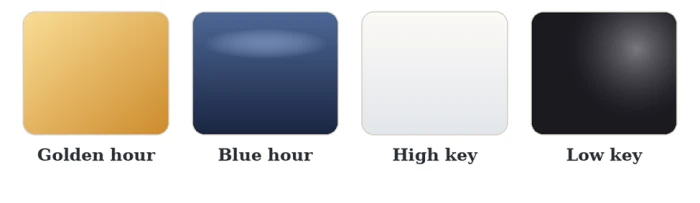
Golden hour warm
The low, warm, golden light just after sunrise or before sunset. Instantly romantic and cinematic. Probably the single most useful phrase in this whole list.
Blue hour cool
The soft, bluish light just before sunrise or after sunset, once the sun is gone but the sky still glows. Reach for it for calm, moody, slightly melancholy scenes.
Backlight warm
Light coming from behind the subject, so they are rimmed with glow and often partly in shadow. Dreamy and atmospheric. Reach for it for hair, steam, dust, and a sense of glow.
Rim light neutral
A thin line of light along the edge of the subject that separates them from the background. Reach for it to add depth and a premium, polished feel.
Dappled light warm
Light broken into patches, like sun falling through leaves. Adds texture and a strong sense of place. Reach for it for outdoor scenes and quiet, lived-in moments.
Practical light warm
A light source you can actually see in the image, such as a lamp, candle, fireplace, or neon sign. Reach for it to add believable atmosphere and a source for the glow.
Volumetric light neutral
Visible beams of light passing through fog, dust, or mist, sometimes called god rays. Reach for it for epic, cinematic, atmospheric shots.
High key cool
A bright scene with few shadows and a light, airy feel. Reach for it for clean, optimistic, commercial images.
Low key neutral
A dark scene ruled by shadow, with small pools of light. Reach for it for moody, dramatic, cinematic images.
Chiaroscuro neutral
A fancy word for strong contrast between light and dark. You never have to write it. Just say dramatic light and deep shadow, and you land in the same place.
The real power comes from combining answers. Pick one word for softness, one for direction, and one for color or time of day. A phrase like soft golden light from the side is doing three jobs at once, and it still reads like a normal sentence.
Color temperature is the quiet lever most people miss. Warm light, the golden, amber, candlelit kind, feels cozy, nostalgic, and inviting. Cool light, the blue, overcast, moonlit kind, feels calm, distant, modern, or tense. Mixing the two, a warm subject against a cool background, is a classic cinematic trick that makes an image feel intentional.

Here is the difference one lighting phrase makes. The flat version is a fine starting point. The lit version tells the model where to put the mood.
Flat a man sitting in a cafe
Lit a man sitting in a cafe, soft window light from the left, warm afternoon tones, gentle shadows
Flat a forest path
Lit a forest path, dappled morning light through the trees, light mist, faint god rays
Flat portrait of a woman
Lit portrait of a woman, golden hour backlight, soft rim light on her hair, warm and dreamy
Flat a perfume bottle on a table
Lit a perfume bottle on a table, single hard light from the side, deep shadows, moody low key
This is the whole idea in one place. Keep the subject exactly the same and change only the lighting line. Below is a single base prompt, then six versions of it, each with a different mood. Each frame is empty on purpose. Generate the image in your tool of choice and drop it into its slot.
The base prompt a young woman with wavy auburn hair and light freckles, wearing a cream linen shirt, calm expression, upper body portrait, standing near a large window |
Now add one lighting line to that base prompt. Same girl, six different feelings. To place an image, click a frame in Word and use Insert, Pictures.
Soft window light neutral Add this line to the base prompt soft diffused window light, even and flattering, gentle shadows 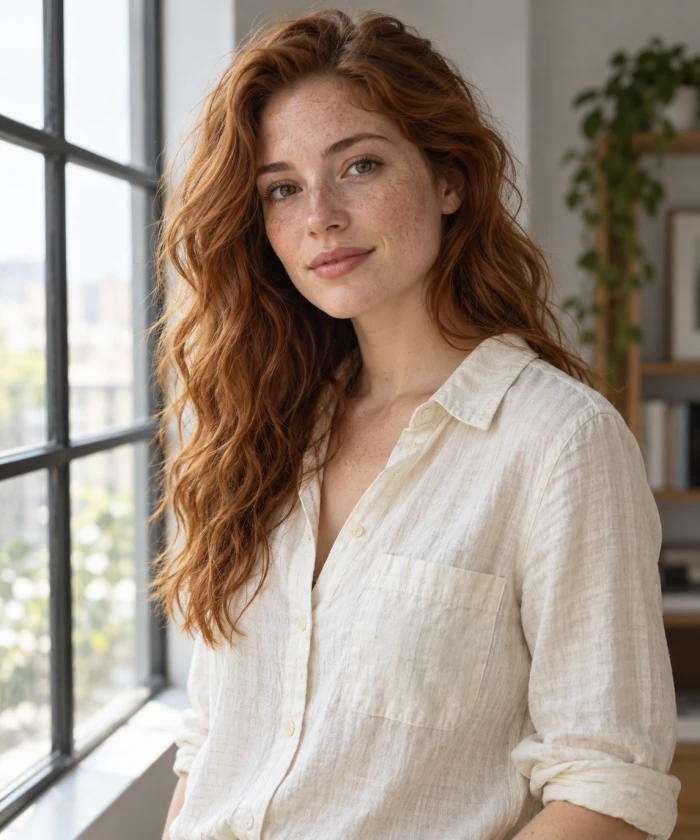 |
Golden hour warm Add this line to the base prompt warm golden hour light from the side, glowing skin, long soft shadows 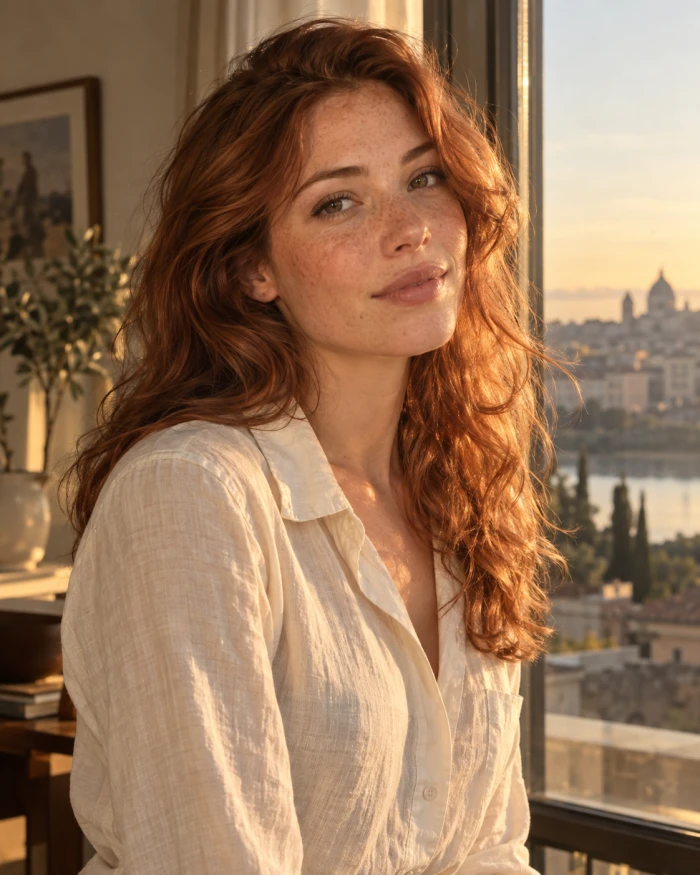 |
Backlight and rim warm Add this line to the base prompt backlit by the sun, bright rim light on her hair, dreamy haze 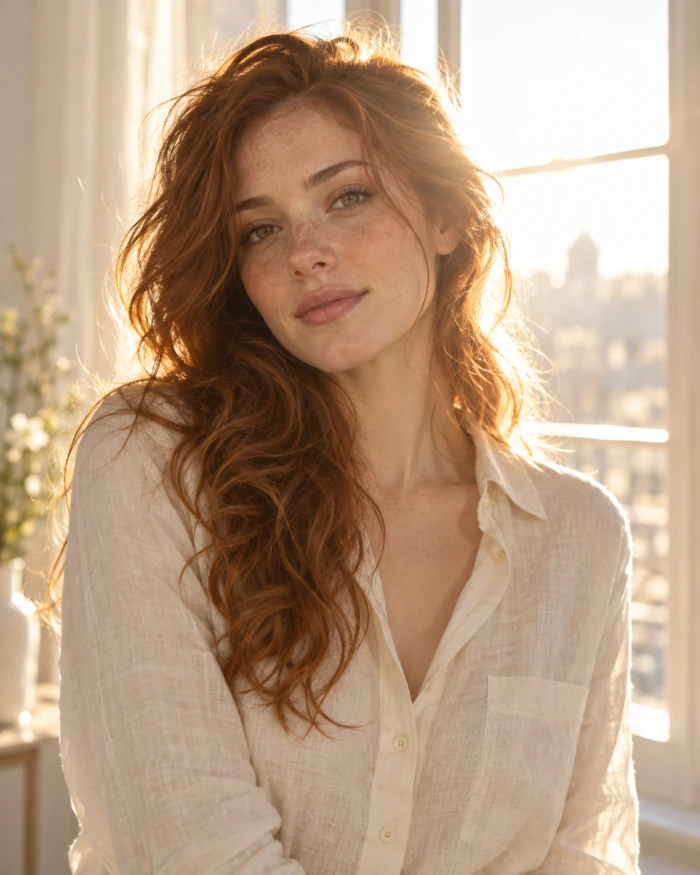 |
Blue hour cool Add this line to the base prompt cool blue hour light, soft bluish tones, quiet and moody 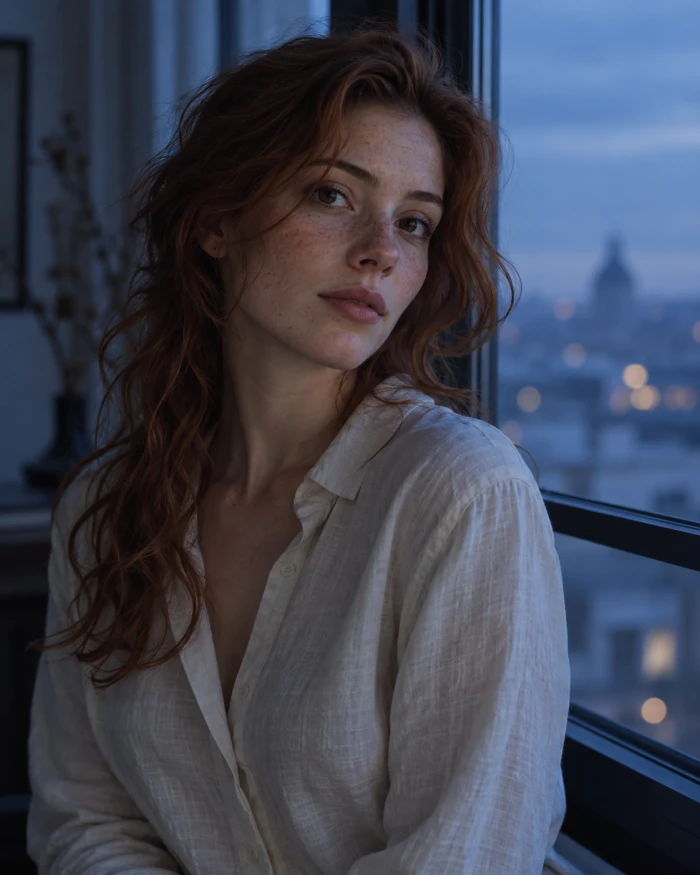 |
Dramatic low key neutral Add this line to the base prompt single hard light from one side, deep shadows, dramatic low key 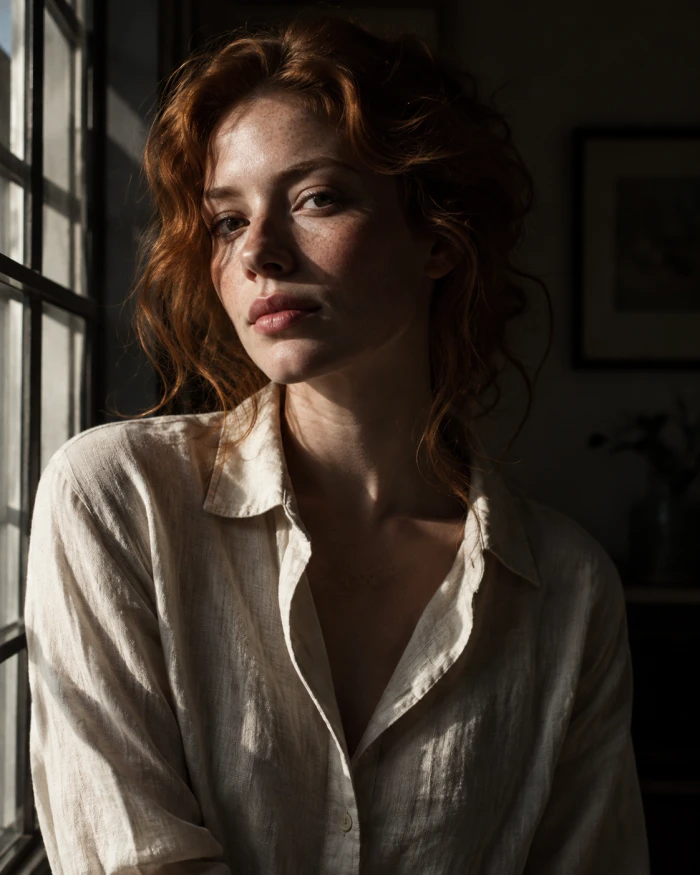 |
Warm lamplight warm Add this line to the base prompt lit by a warm bedside lamp in a dim room, cozy amber glow 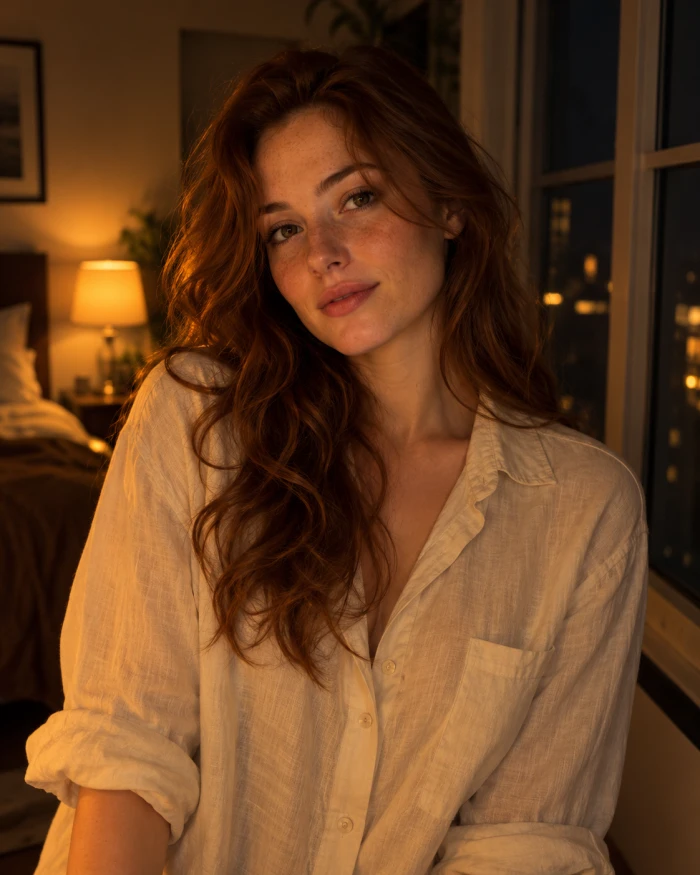 |
● Stacking too many terms. Two or three lighting words are plenty. Ten will confuse the model, and they tend to cancel each other out.
● Contradicting yourself. Bright high key and dramatic dark shadows in the same prompt pull in opposite directions. Pick a mood.
● Reaching for gear language. 85mm f1.4 with a softbox is less reliable than soft light, blurred background. Describe the look, not the kit.
● Forgetting direction. Light from the front is flat and lifeless. Side light and backlight are what create depth.
● Naming a style you cannot picture. If you do not actually know what Rembrandt lighting looks like, do not use the words. Describe what you want to see instead.
Keep this nearby. Add one line from it to almost any prompt and your images stop looking generic.
| Term | What it does | Reach for it when |
|---|---|---|
| Soft light | Gentle, wrapping, blurry shadows | You want calm, clean, and flattering |
| Hard light | Sharp shadows, strong contrast | You want drama or a gritty edge |
| Golden hour | Low, warm, golden glow | You want romance or cinema, fast |
| Blue hour | Cool, soft, bluish dusk light | You want calm and a little melancholy |
| Backlight | Glow from behind the subject | You want dreamy edges and atmosphere |
| Rim light | Thin outline of light on the edge | You want depth and a premium feel |
| Practical light | A visible lamp, candle, or sign | You want believable, cozy atmosphere |
| Volumetric light | Visible beams through haze | You want an epic, cinematic mood |
| High key | Bright, airy, few shadows | You want clean and optimistic |
| Low key | Dark, shadow led, small highlights | You want moody and dramatic |
You do not need to be a photographer. You need to notice light and describe it in plain words. Start with three phrases: golden hour, soft light, and backlight. Add one of them to your next prompt and compare it to the flat version.
Once adding a single lighting phrase becomes a habit, the technical words stop mattering. You are not naming equipment. You are telling the model what the room feels like, and that is the part that was missing all along.
A practical reference for anyone making AI images. Copy the prompts, change the light, and see what the same scene can become.
Scroll far enough through any Indian feed in 2026 and the same shot keeps reappearing in variations: a familiar face, unmistakably real, sta...

The 30 second version• A prompt is the message you type into an AI tool. Longer does not mean better.• AI...

Diagnose it from the replyStart with what came back. The symptom points to the mistake.What the reply looks likeLikely mistakeFixGeneric, co...
Discussion
Join the discussion and share your thoughts below.
No comments yet. Be the first to share your thoughts!