12 AI Photo Prompts for Instagram DP and Profile Pictures
A profile picture is the most viewed image on any Instagram account. It sits at the top of the profile, next to every comment, inside every...
Discover 10 viral AI image prompts you can copy and paste in 2026 to create cinematic portraits, Bollywood posters, Polaroid photos, dioramas, and more.
Scroll far enough through any feed in 2026 and the same handful of looks keep repeating. A colleague sealed inside collector toy packaging. A cousin in a pastel chiffon saree under a hand painted cinema border. A holiday snapshot wrapped in an instant film frame with a date scrawled along the bottom edge. None of it came out of a studio. Almost all of it came from a paragraph of text pasted into a chat window.
What separates the versions that spread from the ones that get three likes is rarely the tool. Every mainstream model now renders skin, fabric and light convincingly. The variable that still moves the result is the prompt: how tightly it locks the face, how precisely it names the optics, and how clearly it states what to leave alone. The ten prompts below are written in full and structured the same way.
Most prompt roundups still circulating were assembled around models that no longer exist in the form they describe. Four shifts across 2026 changed what a good prompt has to contain.
Version churn matters too. Guides naming Midjourney V7 as current describe a model that lost the default slot in June 2026, and libraries built for the DALL-E era point at endpoints removed from the OpenAI API in May.
The practical test for any prompt list is whether it names the model generation it was written against. A prompt tuned for an engine that plans before it renders behaves differently on one that does not, and a prompt that assumes accurate in image text returns decorative nonsense on an older model. Everything below was structured against vendor documentation current in September 2026.
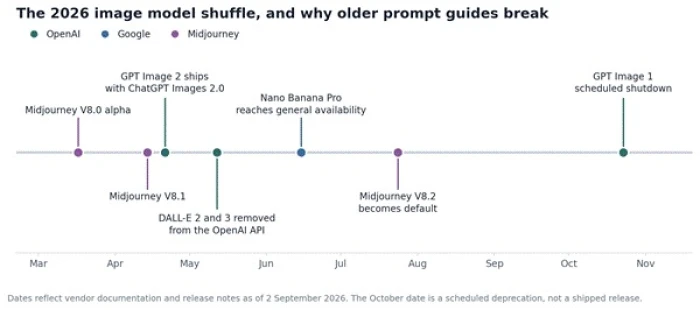
Figure 1. Model releases and retirements across 2026. Any prompt guide written before April is describing a different set of tools.
Every prompt in this article follows the same six part order. The structure is not decorative. Image models weight early tokens heavily, so the identity instruction has to arrive first, and negative constraints have to arrive last where they act as a filter rather than a suggestion.
| Slot | Job it does | Phrasing that carries weight | Share of the prompt |
| 1. Identity Lock | Stops the model quietly redrawing the face into an idealised average | Use the uploaded photograph as the only facial reference. Preserve bone structure, complexion, age and natural asymmetry. | About 20 percent |
| 2. Subject Brief | Wardrobe, pose, expression, hands | Three quarter angle, one hand resting on the railing, composed expression, chin lifted slightly. | About 20 percent |
| 3. Stage | Location, era, props, background depth | Rain soaked side street, vertical neon signage, thin street fog, wet asphalt reflections. | About 20 percent |
| 4. Optics | Focal length, aperture, focus falloff | Simulate an 85mm portrait lens at f/2.0 with sharp focus on the eyes. | About 15 percent |
| 5. Grade | Colour, contrast, grain, halation | Cyan shadows, magenta highlights, deep blacks, visible halation around bright lights. | About 15 percent |
| 6. Guardrails | Negatives plus output specification | Avoid watermarks, plastic skin and identity drift. Output at a 4:5 aspect ratio. | About 10 percent |
Prompt libraries that publish the full six slots rather than a one line description are worth studying for this exact reason. The copy ready prompt gallery on PromptSeen is a useful reference set, because the wording in each entry is load bearing rather than illustrative.
1. Upload one clean reference. Even lighting, unobstructed face, no heavy filter. Compressed or backlit source images are the single most common cause of a result that looks like a stranger.
2. Repeat the identity lock at the end. Placing a short restatement in the guardrail slot measurably reduces facial drift across regenerations.
3. Change one slot at a time. Rewriting a whole prompt after a near miss discards the parts that worked. Adjusting only the grade or only the optics isolates the variable.
4. State the aspect ratio explicitly. Models default to square or landscape, and a portrait crop applied afterwards throws away the composition that was generated.
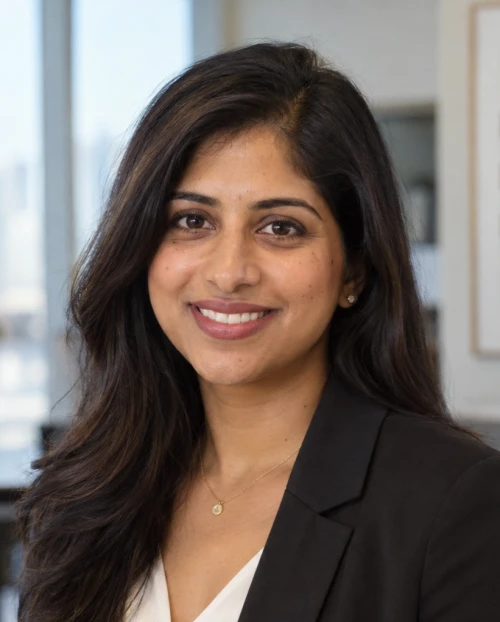
The highest value prompt on this list is also the least glamorous. Professional headshots are the one AI image most people actually need, and the failure mode is brutal: a face that is almost right reads as dishonest on a profile. The identity lock does the heavy lifting, and the instruction to keep visible pores is what stops the result sliding into waxwork territory.
Use the uploaded photograph as the only facial reference. Preserve the exact bone structure, eye shape, brow position, nose, lips, jawline, complexion, age and natural asymmetry. Do not slim, smooth or beautify the face. Keep visible pores and real skin texture. Create a corporate editorial headshot. Dress the subject in a well tailored charcoal blazer over a plain crew neck top. Position the body at a three quarter angle with the face turned toward the lens and a composed, unforced expression. Place the subject against a soft neutral grey studio backdrop with gentle vignetting. Light with a large soft key from camera left, a subtle fill from the right, and a thin rim light separating the shoulders from the background. Simulate an 85mm portrait lens at f/2.0 with sharp focus on the eyes and shallow falloff behind the shoulders. Grade with neutral skin tones, controlled contrast and a clean commercial finish. Avoid text, logos, watermarks, plastic skin, altered facial geometry and background clutter. Keep the face identical to the reference. Output at a 4:5 aspect ratio. |
STRONGEST MODEL
Nano Banana Pro. Its identity handling across reference images is the most consistent of the current set.
SWAP THIS
Change the blazer and backdrop to a linen shirt and warm plaster wall for a founder portrait rather than a corporate one.
This one has been running continuously since the original Nano Banana saree wave and shows no sign of cooling in India or the diaspora. The reason it keeps working is that the reference era is visually specific: chiffon drape, hand painted billboard texture and 35mm grain are all things a model can render precisely once they are named.
Treat the uploaded image as the definitive identity source. Keep every recognisable feature unchanged, including facial proportions, complexion, age and expression. Do not reshape or idealise the face. Style the subject in a pastel chiffon saree with a fine gold border and soft draped pleats. Loose wavy hair, classic kohl lined eyes, muted rose lips, small gold jhumkas. Place the subject beside a weathered garden arch at golden hour, with a hand painted cinema billboard texture behind and a soft romantic haze in the air. Simulate a 105mm lens at f/2.2 with the face crisp and the background dissolving into warm bokeh. Grade the frame with amber highlights, faded magenta shadows and visible 35mm film grain so the result reads as a scanned poster rather than a digital render. Add an ornate typographic border in the visual language of vintage Indian cinema posters, with no readable studio names and no real film titles. Avoid identity drift, waxy skin, duplicated hands, modern clothing and watermarks. Output at a 3:4 aspect ratio. |
STRONGEST MODEL
Gemini with Nano Banana or Nano Banana Pro. The trend was built on this family and the wardrobe vocabulary is well represented.
SWAP THIS
Replace the saree with a Banarasi lehenga or a bandhgala for festival and wedding variants.
Toy packaging has outlasted almost every other AI image trend because the output is flattering without being vain, and because the packaging text makes the image feel custom made for one person. The prompt lives or dies on typography, which is precisely what improved most across 2026.
Use the uploaded photograph as the facial reference for the figure. Keep the likeness clearly recognisable at toy scale. Render the subject as a six inch articulated collector figure with visible joint seams, sculpted fabric folds and a matte vinyl finish. Include three accessories on the side panel that match the subject's profession or hobby. Seal the figure inside a clear plastic blister on a die cut card. Print a bold header band, a series line reading Series 01 of 500, a small holographic authenticity sticker, and a short accessory list in clean sans serif type. All text must be correctly spelled and evenly kerned. Photograph the pack straight on against a retro toy shelf with pegboard hooks softly out of focus behind it. Simulate a 50mm macro lens at f/5.6 with even product lighting, crisp packaging text and gentle specular highlights on the plastic bubble. Avoid real brand marks, licensed characters, blurred typography and distorted anatomy. Output at a 4:5 aspect ratio. |
STRONGEST MODEL
Nano Banana Pro or GPT Image 2. Both handle small readable packaging copy far better than the previous generation.
SWAP THIS
Change the shelf to a glass display case and the header band to a museum label for a quieter, more grown up version.
Instant film keeps performing because it solves the core credibility problem with AI images: they look too resolved. Grain, flash falloff and a physical border make the output read as a memory rather than a render, and handwriting in the border is what pushes it from generic to personal.
Use the uploaded photograph as the sole identity reference and keep the faces exactly as they appear. Reframe the scene as a single instant film photograph resting on a wooden table. Surround the image with a genuine white instant film border, wider at the bottom, with slightly worn corners. Keep the composition candid rather than posed, with the subjects mid movement and slightly off centre. Light the scene with a hard on camera flash that overexposes the nearest skin and drops the background into soft shadow. Add fine chemical grain, a faint warm colour cast, mild vignetting, and a small handwritten date in blue ink along the lower border reading September 2026. Simulate a fixed 35mm plastic lens with slight corner softness. Avoid digital sharpness, HDR contrast, perfect symmetry, watermarks and studio polish. Output at a 1:1 aspect ratio. |
STRONGEST MODEL
Nano Banana 2 or GPT Image 2 at medium quality. The look benefits from imperfection, so the cheaper tier is often the better tier.
SWAP THIS
Ask for two overlapping frames instead of one to imply a sequence from the same afternoon.
Dropping a person into a specific year and city produces a stronger reaction than any generic cinematic filter, because the brain reads period detail before it reads the subject. The critical instruction is the anachronism ban. Without it, a 1986 street quietly acquires a modern car.
Use the uploaded photograph as the only facial reference and preserve the subject's exact features, skin tone and expression. Place the subject standing on a rain soaked side street in Tokyo in 1986, late at night, wearing a period accurate wool overcoat. Fill the background with vertical neon shop signs, glowing vending machines, wet asphalt reflections and a thin veil of street fog. Keep every environmental detail consistent with the year. No modern phones, cars, clothing or signage. Simulate a 35mm anamorphic lens at f/2.0 with the subject sharp and the neon collapsing into horizontal flares behind. Grade with cyan shadows, magenta highlights, deep blacks and visible halation around the brightest lights. Avoid identity drift, floating limbs, garbled signage text and anachronisms. Output at a 16:9 aspect ratio. |
STRONGEST MODEL
Midjourney V8.2 for the grade, or Nano Banana Pro when the face has to stay exact.
SWAP THIS
Trade Tokyo 1986 for Bombay 1974, Paris 1963 or Seoul 1999. The slot structure holds for any of them.
The flash filter look dominates party and nightlife posts because it signals a moment that was actually happening rather than one that was arranged. Everything about the prompt runs against conventional photographic quality, which is the point: even exposure and clean skin would kill the effect.
Use the uploaded photograph as the identity reference and keep the face unchanged, including natural skin texture and any blemishes. Recreate the shot as a candid nightlife photograph taken on a compact digital camera with the built in flash firing directly at the subject. Keep the pose unguarded, mid laugh or mid turn, with the crowd behind falling away into darkness. Overexpose the highlights on the forehead, cheekbones and jewellery, crush the background to near black, and let a shallow depth of field blur the nearest shoulder. Add fine sensor noise, slight chromatic fringing at the frame edges, and the cool white balance typical of early 2000s compact cameras. Simulate a 28mm fixed lens at f/2.8 with a small amount of handheld motion blur in the background only. Avoid studio lighting, retouched skin, even exposure, clean backgrounds and watermarks. Output at a 4:5 aspect ratio. |
STRONGEST MODEL
Nano Banana 2. Fast, cheap, and forgiving of a look that is meant to be rough.
SWAP THIS
Move the setting to a lift mirror or a car back seat for the two other framings that circulate most.
The scrapbook layout answers a problem single images cannot: it holds several moments at once and reads as effort. It also happens to be the hardest prompt on this list, because it asks for legible handwriting, believable paper shadows and non symmetrical placement all at once.
Use the uploaded photographs as the source images and keep every face unaltered. Arrange the images as a physical scrapbook spread photographed from directly above. Place three prints at slightly different angles, held down with strips of matte washi tape and one metal paper clip. Surround them with torn notebook paper, a dried pressed flower, a used train ticket, two small stickers, and short handwritten notes in blue ballpoint. Keep all handwriting legible and correctly spelled. Add a faint coffee ring, soft paper fibre texture, and a small shadow under every raised edge so the layers read as real objects. Light the page with soft window light falling from the upper left. Simulate a 50mm lens at f/4 shot flat lay with even focus across the page. Avoid digital collage aesthetics, glossy finishes, symmetrical placement and watermarks. Output at a 4:5 aspect ratio. |
STRONGEST MODEL
Nano Banana Pro. Handwriting and layout planning are where the reasoning pass shows up most clearly.
SWAP THIS
Swap the train ticket and pressed flower for boarding passes and shells to make a travel version.
Tilt shift miniatures have circulated for years, but the 2026 version puts a recognisable person inside a handmade set built from visible physical materials. Naming the materials is what stops the model producing a shrunken photograph instead of a model.
Use the uploaded photograph as the facial reference and keep the likeness recognisable at miniature scale. Recreate the subject as a hand painted 1:64 scale figure standing inside a detailed tabletop diorama of their own daily life, such as a corner desk, a coffee counter or a workshop bench. Build the surrounding set from visible physical materials: painted foam board, tiny printed signage, real sawdust, model railway scatter, and a single practical lamp. Simulate a macro lens at f/2.8 photographed at figure eye level, with a narrow band of sharp focus across the face and heavy falloff toward the front and back of the frame. Light the set with one warm practical source and a cool fill so the scale reads as a physical model rather than a shrunken photograph. Grade with saturated toy colours, soft shadows and a faint dust haze in the light beam. Avoid full human scale realism, floating objects, garbled signage and watermarks. Output at a 3:2 aspect ratio. |
STRONGEST MODEL
Midjourney V8.2. Stylised physical texture is where it still holds an edge.
SWAP THIS
Set the diorama inside a matchbox or a desk drawer for a tighter, more absurd frame.
This prompt was not viable eighteen months ago. Text inside generated images arrived as decorative nonsense. Now that accurate type is realistic, a personal editorial poster is one of the few AI outputs that looks genuinely designed, and it performs well as a profile banner or print.
Use the uploaded photograph as the only identity reference and keep the face unchanged. Design a single page editorial poster. Place the subject on the right third of the frame in a half body crop against a deep olive background. Set the following text exactly as written, with correct spelling and consistent kerning. Headline in large condensed uppercase: THE LONG WAY ROUND Subhead in medium weight sentence case: Notes on getting there slowly Footer line in small caps: Issue 04 . September 2026 Keep a wide left margin, generous line spacing and a strict two column grid. Simulate a 65mm lens at f/4 with even studio lighting on the subject and no glare on the background. Grade with muted olive, bone white and a single warm accent. Avoid misspelled or duplicated type, decorative fonts, stock photo styling and watermarks. Output at a 2:3 aspect ratio. |
STRONGEST MODEL
Nano Banana Pro first, GPT Image 2 second. Both render long strings accurately, and both handle non Latin scripts.
SWAP THIS
Replace the headline with a name and a date to turn the poster into an event or anniversary print.
Hand drawn animation styling remains the most requested transformation of the year. The version below describes the technique rather than naming a studio, which produces a more controllable result and avoids the style attribution requests that several platforms now decline.
Use the uploaded photograph as the compositional and identity reference. Keep the subject recognisable while translating the rendering into illustration. Repaint the scene as a single frame from a hand drawn feature animation. Use soft watercolour washes for the sky, visible brush direction in the foliage, and clean confident line work on the character. Keep the palette warm and gentle, with late afternoon light raking across the scene and dust motes suspended in the beams. Simplify the background into layered painted planes with a slightly out of focus far distance. Hold the character's proportions naturalistic rather than exaggerated, with a calm, unhurried expression. Avoid photographic texture, 3D rendering, harsh outlines, the name or signature of any living artist or studio, and watermarks. Output at a 16:9 aspect ratio. |
STRONGEST MODEL
Midjourney V8.2 or Nano Banana Pro. Midjourney gives a looser painterly hand, Nano Banana Pro keeps the likeness tighter.
SWAP THIS
Ask for cel shaded 1990s television animation or stop motion felt for two very different results from the same structure.
Model choice changes the output more than most prompt guides admit. Google grounds Nano Banana Pro in Search data, which produces factual geometry and accurate signage but constrains surreal work. Midjourney applies a stronger house aesthetic. GPT Image 2 plans layout before rendering and accepts the largest set of reference images. The table below routes each prompt to the tool that handles its dominant demand.
| Prompt | First choice | Why that pairing |
| 1. Editorial headshot | Nano Banana Pro | Identity fidelity across reference images |
| 2. Bollywood poster | Gemini, Nano Banana family | Wardrobe and era vocabulary is deeply represented |
| 3. Action figure pack | Nano Banana Pro or GPT Image 2 | Small packaging copy has to be spelled correctly |
| 4. Polaroid frame | Nano Banana 2 | Cheap, fast, and the look rewards imperfection |
| 5. Era transplant | Midjourney V8.2 | Colour grading and period atmosphere |
| 6. Direct flash | Nano Banana 2 | Low cost, high iteration count |
| 7. Scrapbook page | Nano Banana Pro | Legible handwriting plus layout planning |
| 8. Miniature diorama | Midjourney V8.2 | Stylised physical texture |
| 9. Typographic poster | Nano Banana Pro | Highest reported in image text accuracy |
| 10. Painterly frame | Midjourney V8.2 | Looser illustrative hand |
Casual use rarely needs an API key. The free Gemini app tier allows a small number of Nano Banana Pro generations per day, ChatGPT free accounts get a handful of images in a rolling window, and Midjourney starts at ten dollars a month on the Basic plan with Standard at thirty. The API only becomes the cheaper route past a few hundred images a month or inside a product.
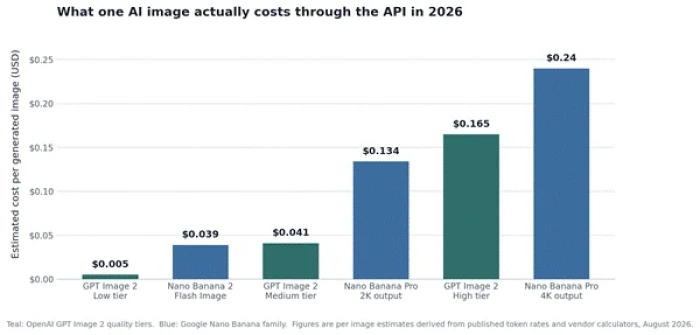
Figure 2. Published per image estimates across the current flagship models. Per image figures are derived from token rates and vendor calculators rather than posted list prices, so real spend moves with reference image size and reasoning overhead.
Two practical notes. Passing a reference image into GPT Image 2 processes that input at high fidelity and cannot be switched off, so edit requests cost more than text only generations. And resolution is not a linear multiplier: 4K output on Nano Banana Pro costs close to double its 2K rate, which matters when a prompt is being iterated fifteen times before it lands.
Generating at the wrong ratio and cropping afterwards discards composition the model was asked to build. Naming the ratio inside the guardrail slot costs six words and prevents the most common avoidable loss.
| Placement | Ratio | Pixel target | Note |
| Instagram feed portrait | 4:5 | 1080 x 1350 | Largest feed footprint available |
| Reels, Stories, WhatsApp status | 9:16 | 1080 x 1920 | Keep faces clear of the lower third |
| Instagram square | 1:1 | 1080 x 1080 | Best for instant film and packaging |
| Pinterest pin | 2:3 | 1000 x 1500 | Suits typographic posters |
| Profile photo | 1:1 | 800 x 800 | Headshots crop to a circle, so allow margin |
| YouTube thumbnail | 16:9 | 1280 x 720 | Suits cinematic and era transplant frames |
| X post image | 16:9 | 1200 x 675 | Wide crops lose detail on mobile |
Four failures account for most disappointing generations. Each has a specific fix inside the six slot structure rather than a general instruction to try again.
| Symptom | Likely cause | Fix |
| Face looks like a relative, not the subject | Identity lock is too short or buried mid prompt | Move it to the first sentence and restate it in the guardrail slot |
| Skin looks like polished plastic | No texture instruction, model defaults to beautification | Add visible pores, natural asymmetry and a do not beautify clause |
| Text in the image is garbled | Text requested inside a descriptive sentence | Put every string on its own line prefixed with set the following text exactly as written |
| Output looks like generic stock photography | Optics and grade slots are missing | Name a focal length, an aperture and three specific colour instructions |
| Hands are wrong | Pose left unspecified | State what each hand is doing and touching |
| Style drifts between regenerations | Whole prompt rewritten after each attempt | Change one slot per attempt and keep the rest byte identical |
Three points worth settling before any of these images gets posted or sold.
Naming a living artist or a specific studio inside a style request is also a shrinking option. Several providers now decline or dilute those requests, and describing the technique produces a more controllable result anyway, which is why prompt ten specifies watercolour washes and brush direction rather than a studio name.
Individual looks expire. The saree poster, the blister pack and the instant film border will all be replaced by something that has not surfaced yet. What does not expire is the structure underneath them: lock the identity, brief the subject, build the stage, name the optics, set the grade, then close the door on everything unwanted.
Any new trend that appears on a feed can be reverse engineered into those six slots in about five minutes, which is a more durable skill than a saved list of prompts. For anyone who would rather start from a tested set and adapt, PromptSeen maintains free copy ready collections organised by style, including its trending Gemini photo editing prompts, which is a reasonable place to see the six slot pattern applied across dozens of looks.
A profile picture is the most viewed image on any Instagram account. It sits at the top of the profile, next to every comment, inside every...
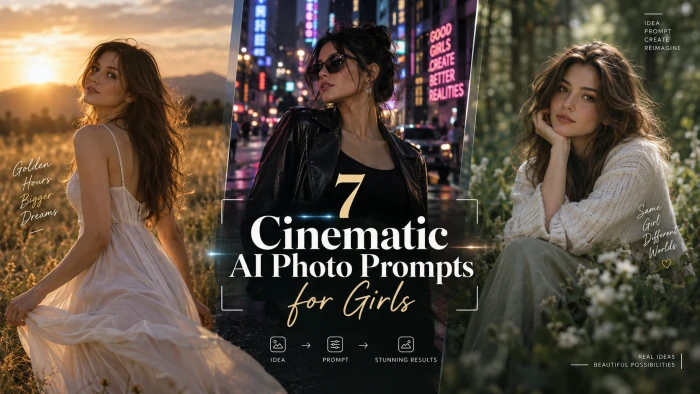
PROMPT COLLECTION7 Cinematic AI Photo PromptsEditorial portraits built from one reference photo, styled seven ways.The seven portraits in th...
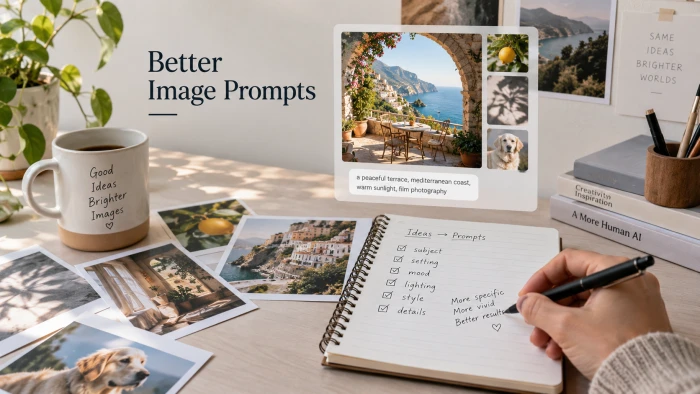
GUIDE Updated September 2026 About a 12 minute readHow to Write Better AI Image PromptsA complete, practical guide t...
Discussion
Join the discussion and share your thoughts below.
No comments yet. Be the first to share your thoughts!